Jaani Kirik: The White Mask
Find the viewpoint and reveal the time when today’s brick church wore a pale nineteenth-century skin.
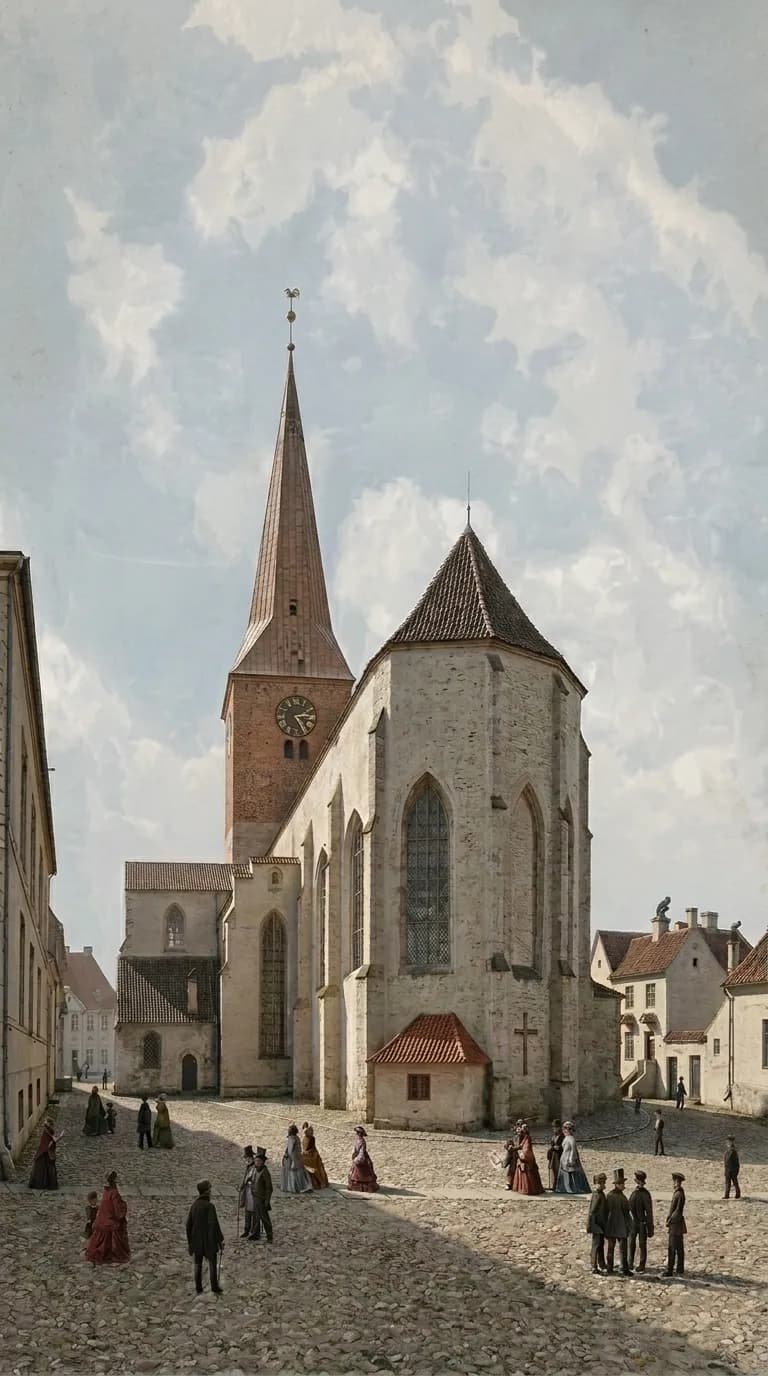
The story
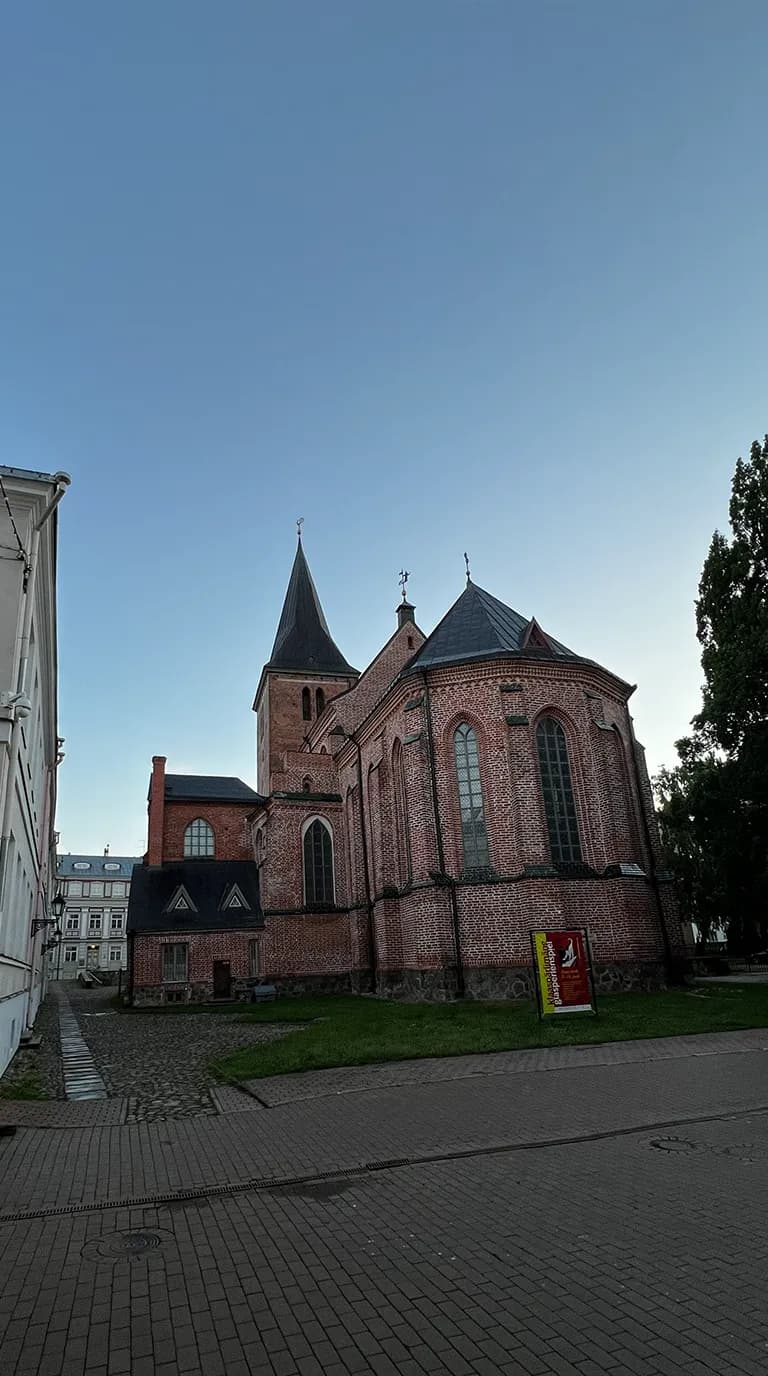
Jaani kirik is famous for its medieval terracotta figures — hundreds of small faces looking down from the brick. But in the 19th century you couldn't see the brick at all: the church wore a pale plastered skin, standing over the square like a calm light-stone mass.
The streets around it were ordinary then — cobbles, neighbours, everyday traffic — not a restored monument zone. Only later restoration stripped the pale layer away and taught the city to read its medieval church again.
A building hiding its own face
That's what this Time Layer catches: not a ruin, not a triumph, but the strange in-between moment when a Gothic landmark was still hiding under someone else's idea of what it should look like.
Reveal the pale 19th-century church over today's red brick — and hear why Tartu repainted its own history.
Quick facts
- •St John's is renowned for its medieval terracotta sculptures — a rarity in Northern Europe.
- •In the 19th century the brick body was hidden under pale plaster.
- •Restoration later re-exposed the medieval brickwork you see today.
Open Jaani Kirik in WanderTrails
Walk to the real viewpoint, raise your camera, align the guide with today's view — and watch the past appear over the present, with the full audio story in English, Estonian, or Russian.