Härjapea: Tallinn's Lost River
A real river once crossed Tallinn's centre — today it flows hidden underground.
The story
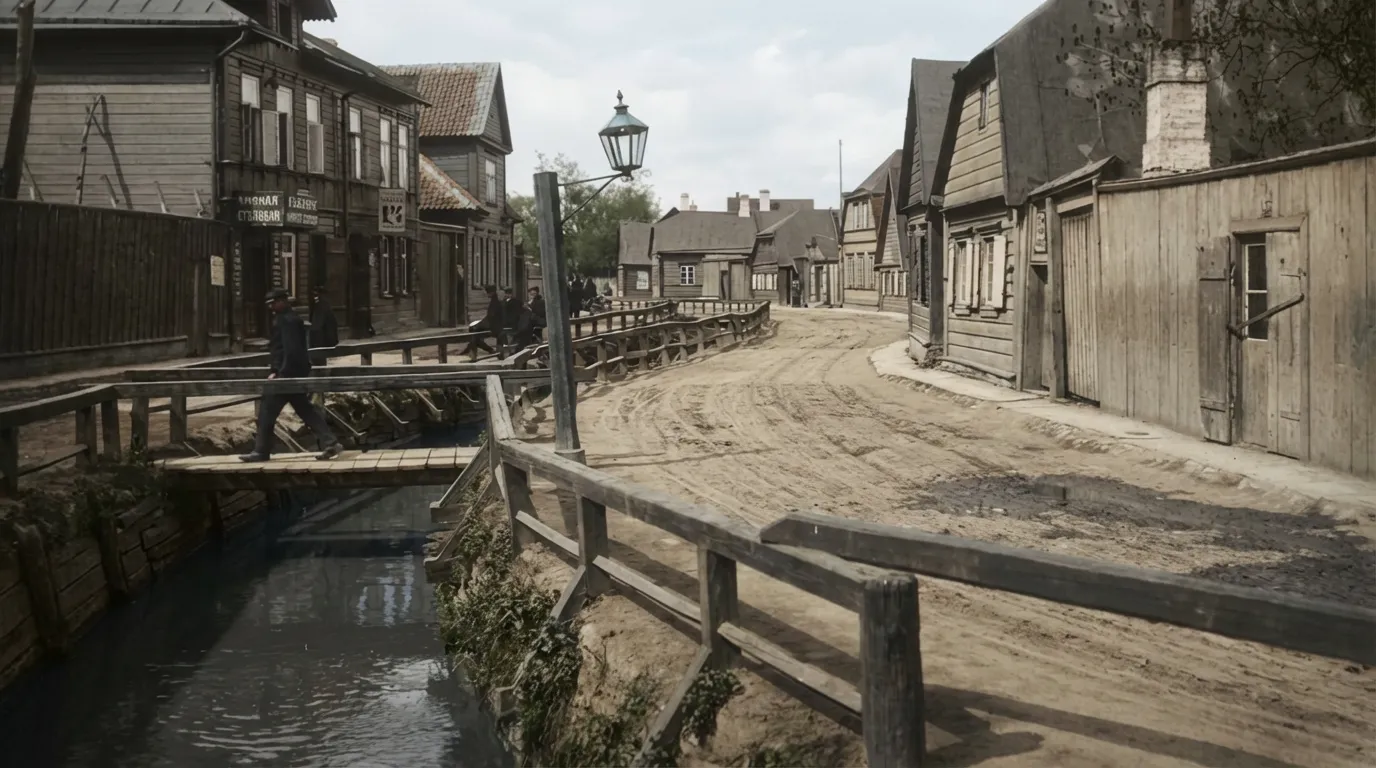
A real river once ran through the centre of Tallinn. The Härjapea flowed from Lake Ülemiste to the bay, past mills and workshops — and today it's gone from the surface entirely, buried in pipes under the streets. The city even left a clue in plain sight: Jõe tänav, 'River Street'.
This wasn't a decorative stream. Watermills stood on the Härjapea from the 13th century, and in 1345 the Danish king Valdemar IV granted Tallinn the right to reroute its water into the town moats and mills. By 1688, a city plan shows eight mills working along it.
How a city buries a river
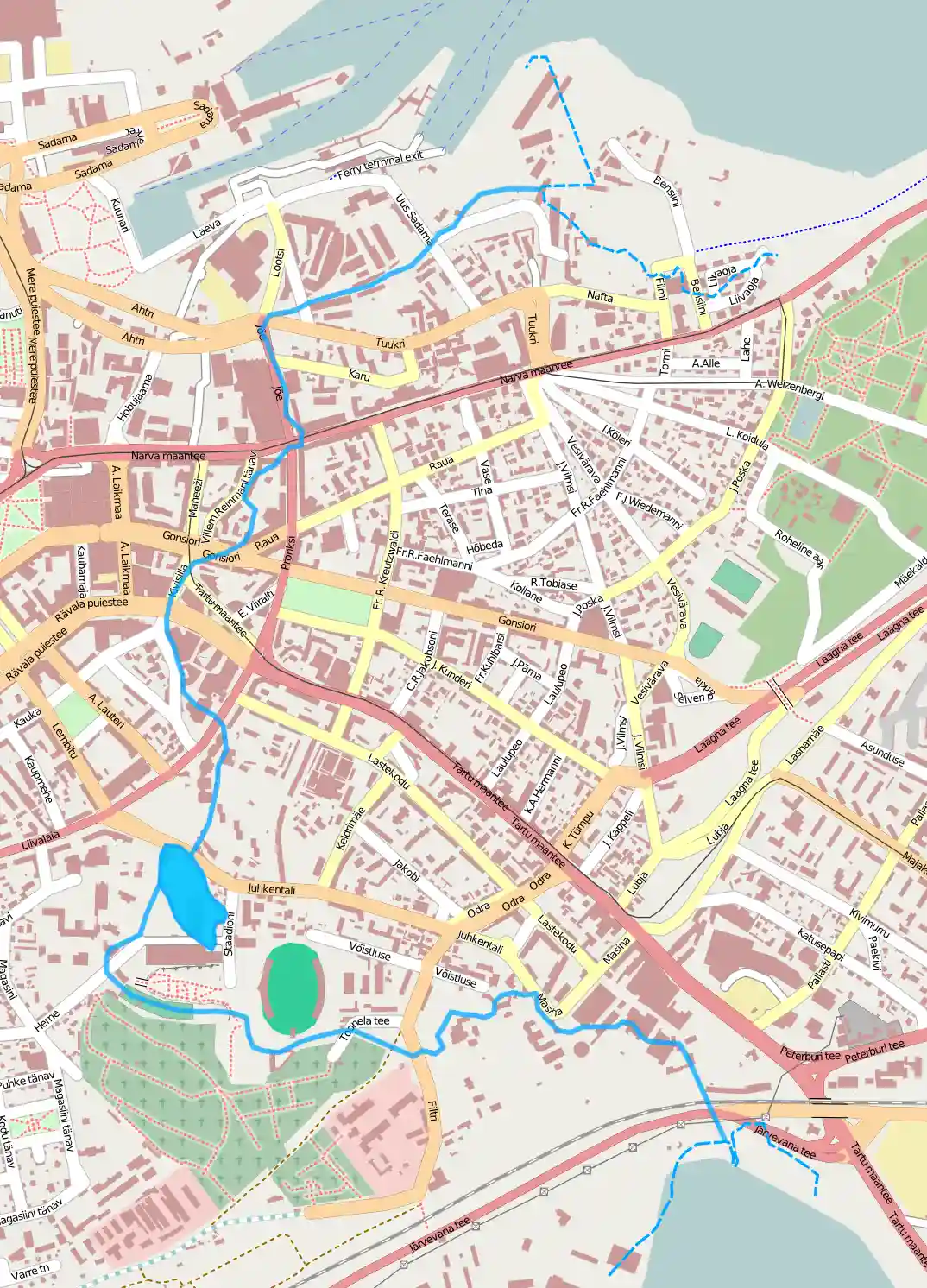
Industry loved the river to death. By the early 1900s the Härjapea had become an open drain — stinking, polluted, avoided. So Tallinn did what many industrial cities did: it covered the problem over, street by street, until the river became a hidden sewer collector.
It still flows today, out of sight, under the traffic. And after heavy rain, some streets along the old riverbed still flood — as if the city briefly remembers what it buried.
In the app you follow the ghost line of the river through modern streets — with the photos and the flood stories to match.
Quick facts
- •Mills operated on the Härjapea from the 13th century; eight are shown on a 1688 plan.
- •In 1345 King Valdemar IV allowed Tallinn to divert the river into moats and mills.
- •The river was fully buried by the 20th century and still flows underground.
Open Härjapea in WanderTrails
Stand at the real spot and unlock the full story with photos and audio narration in English, Estonian, or Russian — free, self-guided, no booking needed.