Malmi Street Corner: The City That Started Again
Reveal a brand-new corner from a Soviet anniversary album — and discover what had to disappear before it could rise.
The story
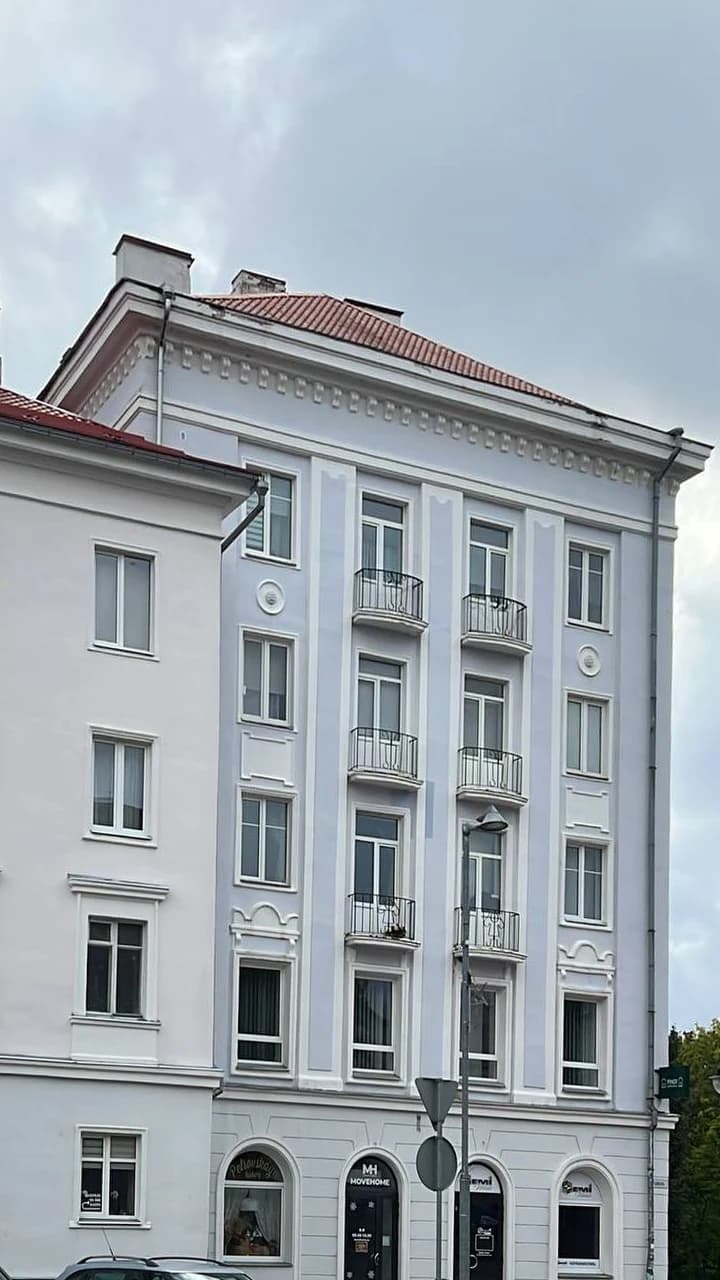
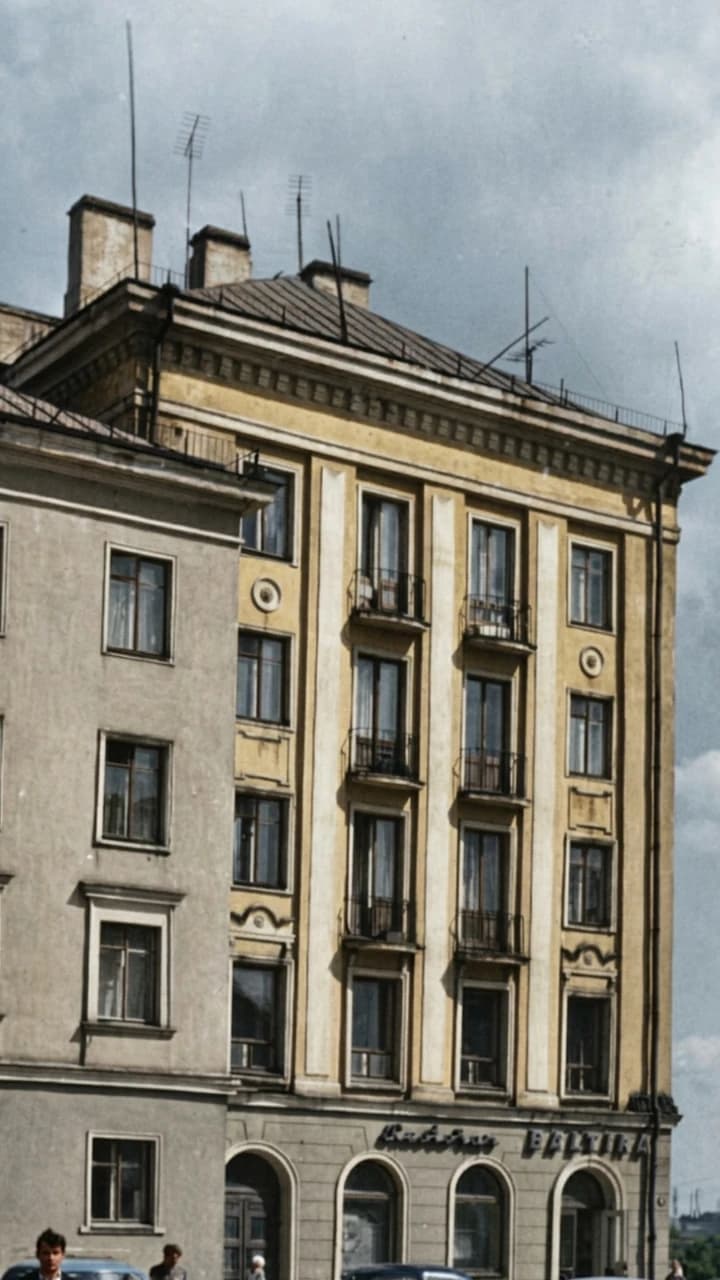
Look at the corner building: five storeys of fresh plaster, tall pilasters, iron balconies and, above the arches, the word Baltika. Nothing in this picture looks old, and that was the point. The photograph comes from an Estonian History Museum album titled Narva, twenty years, 1944 to 1964 — a portrait of the city that rose after the war. In front of you is number ten Pushkin Street, at the corner of Malmi Street.
Behind this confident corner lies a city that had almost disappeared. In March 1944, Soviet air raids burned Narva's old town, a baroque ensemble from the Swedish era that the city's museum calls a pearl. Across Narva, of roughly three and a half thousand stone buildings, only about two hundred could be made habitable again. Yet many walls still stood, and in 1947 the old town ruins were placed under heritage protection.
Open Malmi Street Corner in WanderTrails
Walk to the real viewpoint, raise your camera, align the guide with today's view — and watch the past appear over the present, with the full audio story in English, Estonian, or Russian.