Saiakang: Bread Passage
Find the viewpoint and reveal the narrow passage where Tallinn’s bread trade was once packed into a few metres of shops, rules, signs, and daily traffic.
The story
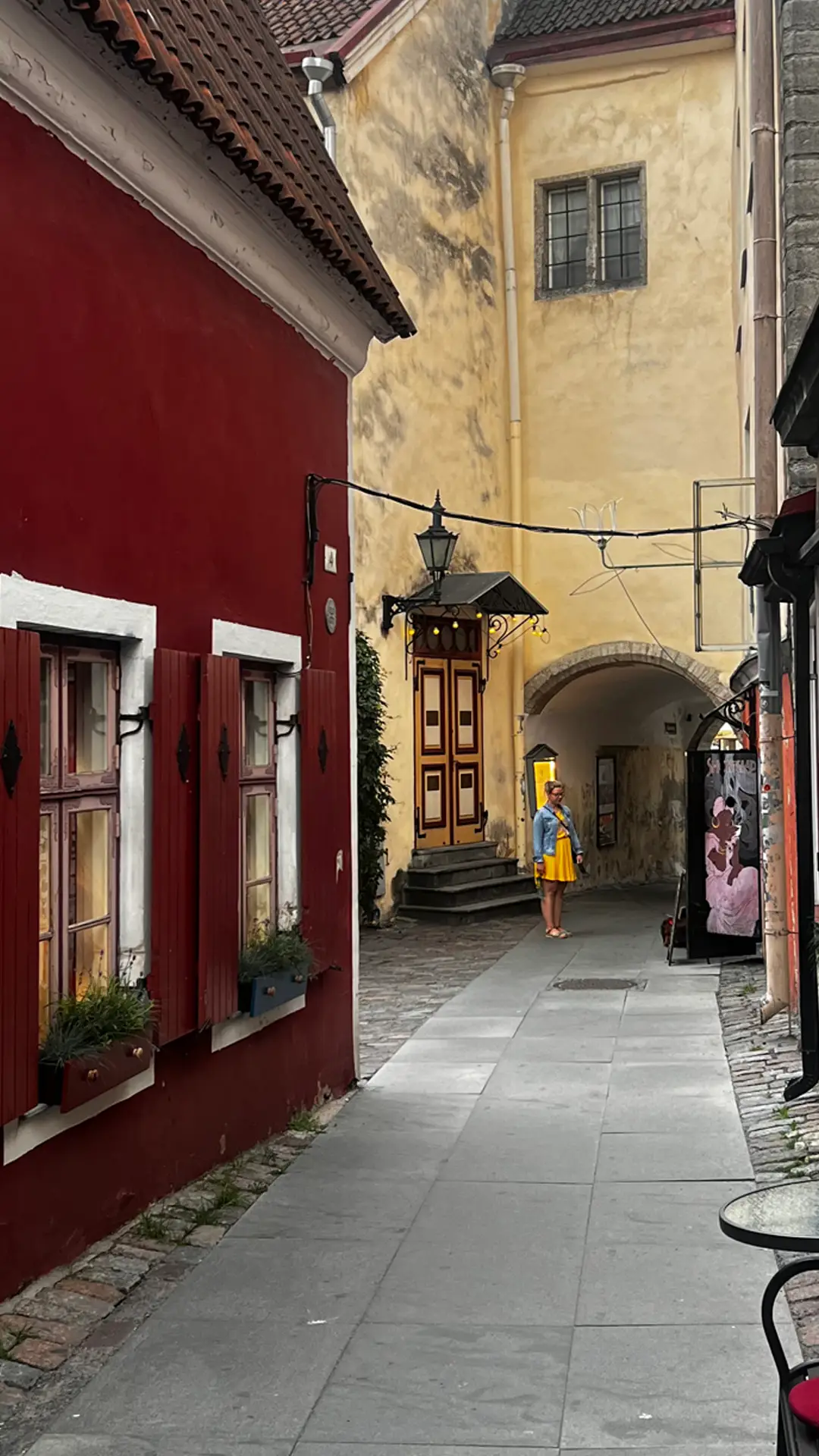
Saiakang — 'bun passage' — is one of the shortest streets in Tallinn, and its name is not romantic branding. In German it was Weckengang; either way, it meant bread. Bakeries and bread shops are documented in this narrow lane since the late 1300s.
Bread in medieval Tallinn was serious business: loaves had regulated weights, bakers marked their products, and guild masters could inspect them. Selling burned, mouldy, or underweight bread wasn't bad service — it was a trade offence.
Seven centuries of small shops
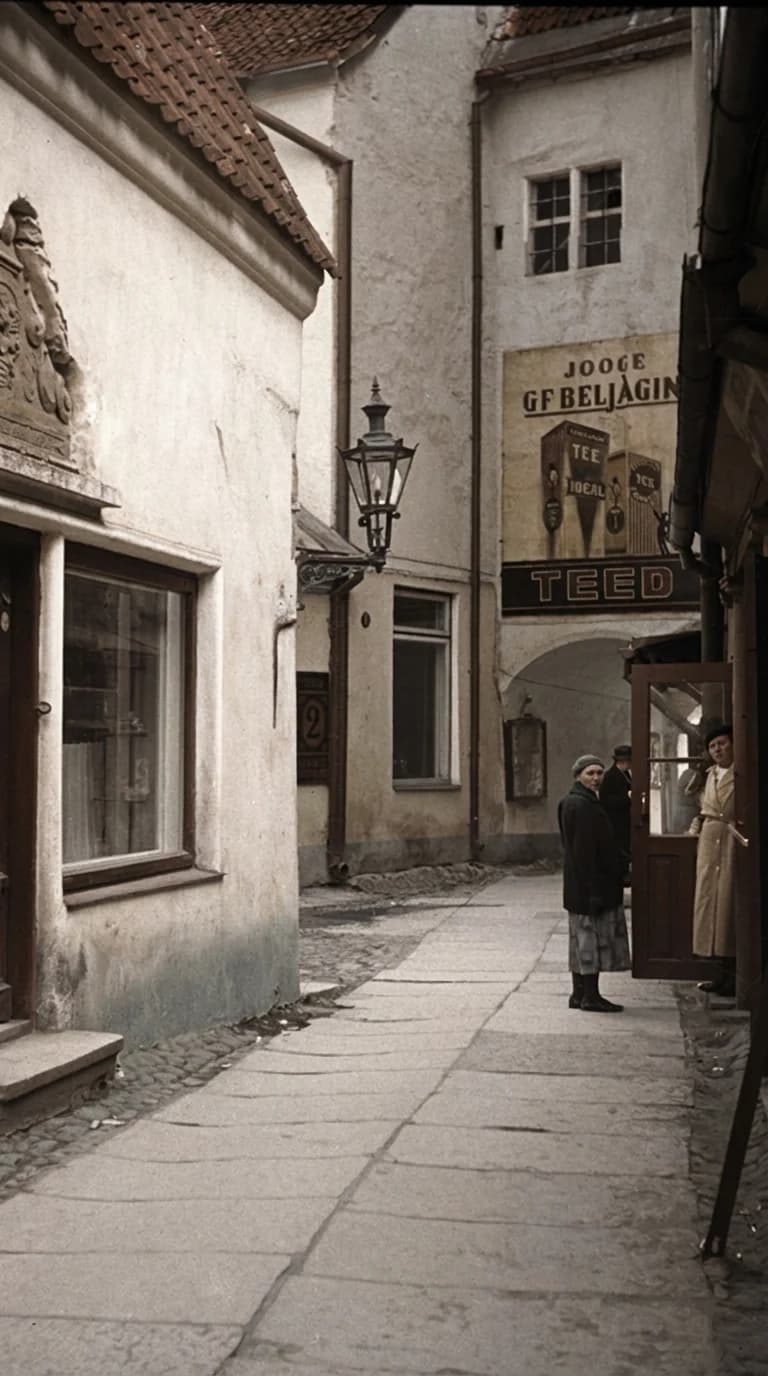
The passage linked Pikk Street to the market square like a controlled food corridor, and it never really changed its nature. The tiny protected shop building at Saiakang 4 carried small commerce from 1656 into the 20th century. The product changed; the structure of the place didn't.
Reveal the old commercial alley — hanging lamp, tea adverts, shopkeepers in the doorway — layered over today's passage.
Quick facts
- •Bread shops are recorded here from the late 14th century.
- •Loaf weights and quality were regulated and inspected by the guild.
- •Saiakang 4 is a protected shop building dating from 1656.
Open Saiakang in WanderTrails
Walk to the real viewpoint, raise your camera, align the guide with today's view — and watch the past appear over the present, with the full audio story in English, Estonian, or Russian.