St. Catherine's Passage
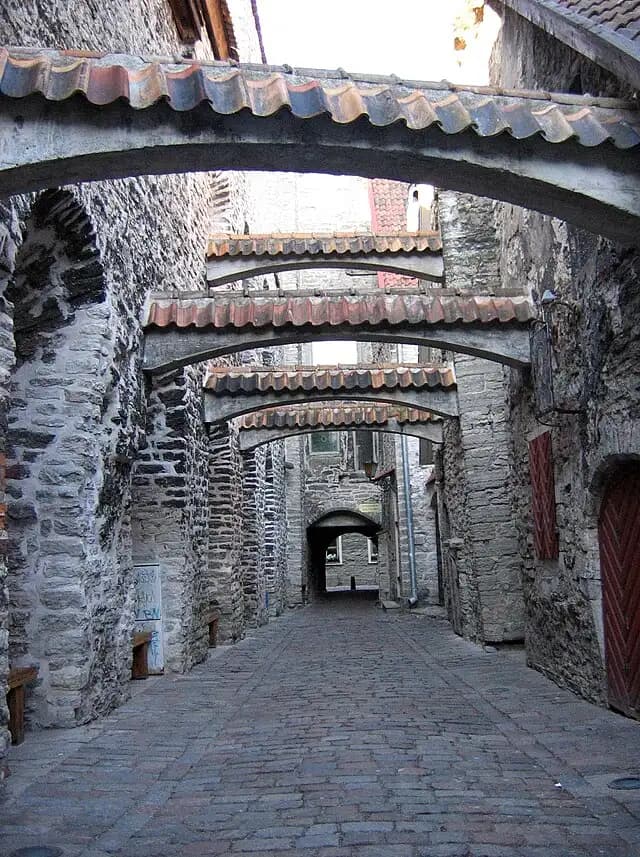
A short medieval lane where the walls of a Dominican monastery, artisan workshops, and centuries-old tombstones meet in one narrow space.
The story
This quiet lane between Vene and Müürivahe streets was once part of one of medieval Tallinn's most powerful religious complexes. Dominican monks lived, taught, traded fish, brewed several kinds of beer, and buried the city's elite behind these walls — the monastery is documented here from 1246.
The Reformation hit it hard: in the 1520s the complex was attacked and partly destroyed, and only fragments survive. But the passage itself still follows the exact line of the medieval monastery wall.
Tombstones and craft studios
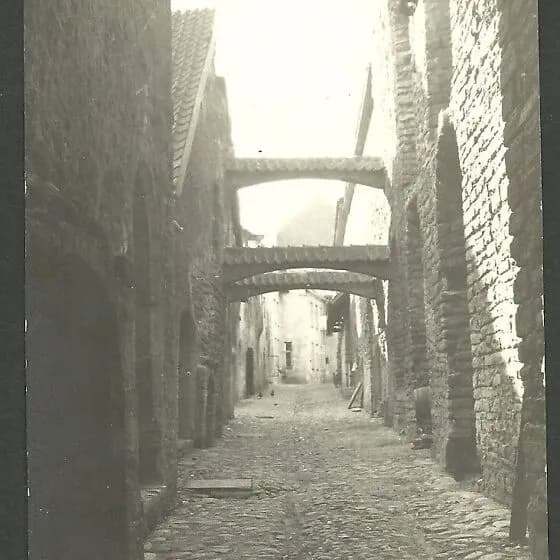
Walk the lane today and you pass a row of medieval tombstones mounted along the wall — grave slabs of merchants, officials, and clergy carved from the late 1300s onward, collected here in the 20th century as a small open-air lapidarium.
A few metres from those stones, the Katariina Guild (founded 1995) keeps the lane alive: glass, ceramics, leather, and jewellery made in open studios inside buildings that once belonged to the monastery. Seven centuries of city life, compressed into one stretch of cobblestones.
The app walks you through the passage stone by stone — with the full audio story of the monastery's rise, destruction, and afterlife.
Quick facts
- •The Dominican monastery is documented here from at least 1246.
- •The monks ran a school, a library, a fish trade — and their own brewery.
- •The tombstones along the wall date from the late 14th century onward.
- •Since 1995 the Katariina Guild's artisans work in open studios along the lane.
Open St. Catherine's Passage in WanderTrails
Stand at the real spot and unlock the full story with photos and audio narration in English, Estonian, or Russian — free, self-guided, no booking needed.