Viru Gate: Rails Through the Postcard
Find the viewpoint and reveal the moment when Tallinn’s fairytale gate was cut open for rails, horses, and the city’s first tram line.
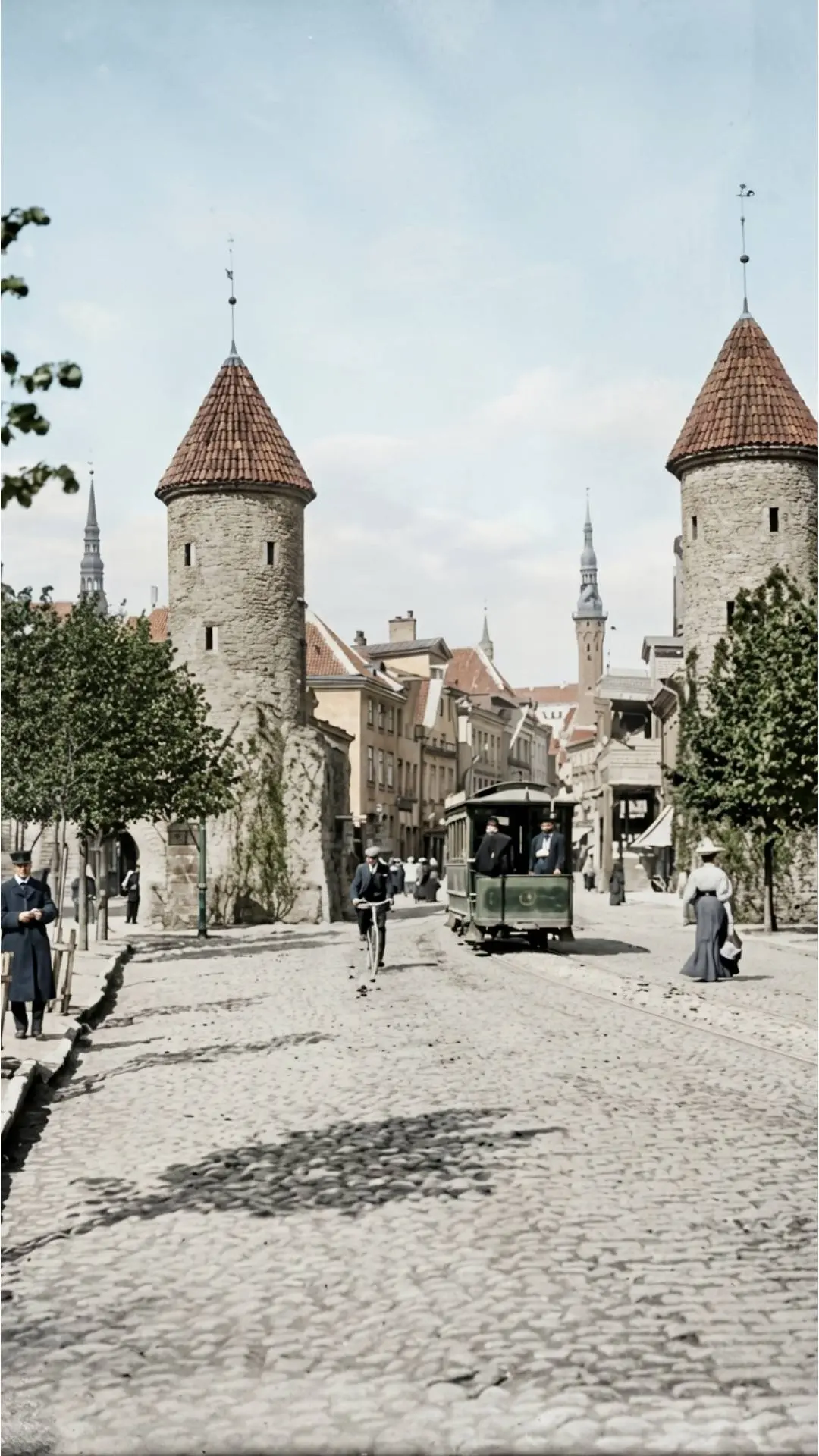
The story
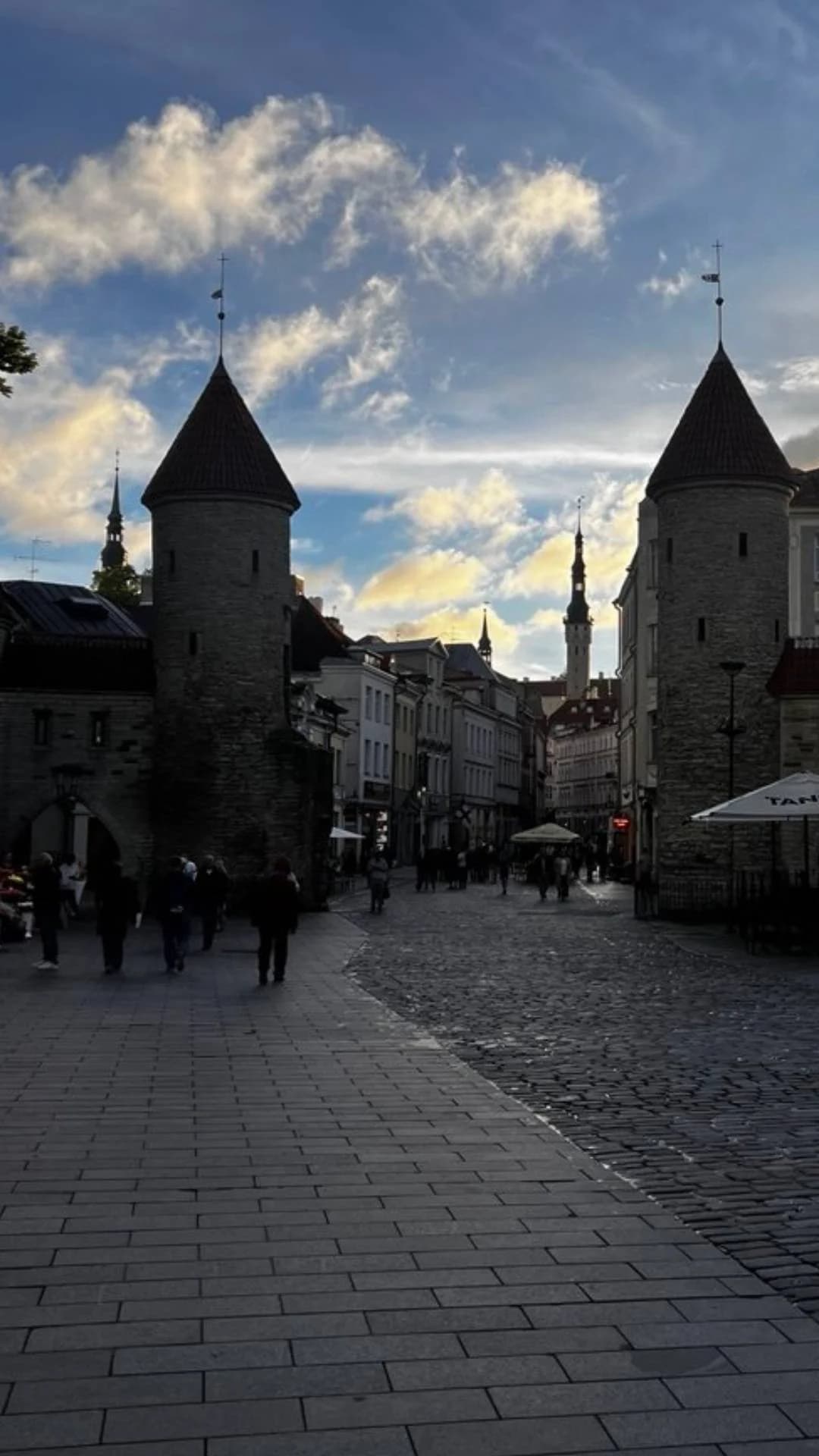
The two round towers of Viru Gate are Tallinn's postcard — the fairytale entrance to the Old Town, framed by flowers and crowds. But for about thirty years, this gate wasn't a postcard at all. It was a transport corridor with rails running straight through it.
In 1888, Tallinn's first horse-drawn tram line opened between Vanaturu Kael and Kadriorg, and its route led right through Viru Street. To let horses, carriages, and tramcars pass, the medieval entrance was cut open and reshaped. The corner towers survived — the old gate system didn't.
A gate that learned to move
The horse tram was no small experiment: by 1902 the network stretched more than seven kilometres across the city. Stand at the viewpoint today and you see pedestrians where conductors once rang their bells — the moment Tallinn stopped only defending its old edge and started moving through it.
In the app, you stand at the exact viewpoint, raise your camera, and watch the tram-era street appear over today's gate — with the full audio story.
Quick facts
- •Tallinn's first horse-drawn tram line opened in 1888, running through Viru Street toward Kadriorg.
- •By 1902 the horse-tram network exceeded seven kilometres.
- •The corner towers survived the reshaping and still stand today.
Open Viru Gate in WanderTrails
Walk to the real viewpoint, raise your camera, align the guide with today's view — and watch the past appear over the present, with the full audio story in English, Estonian, or Russian.