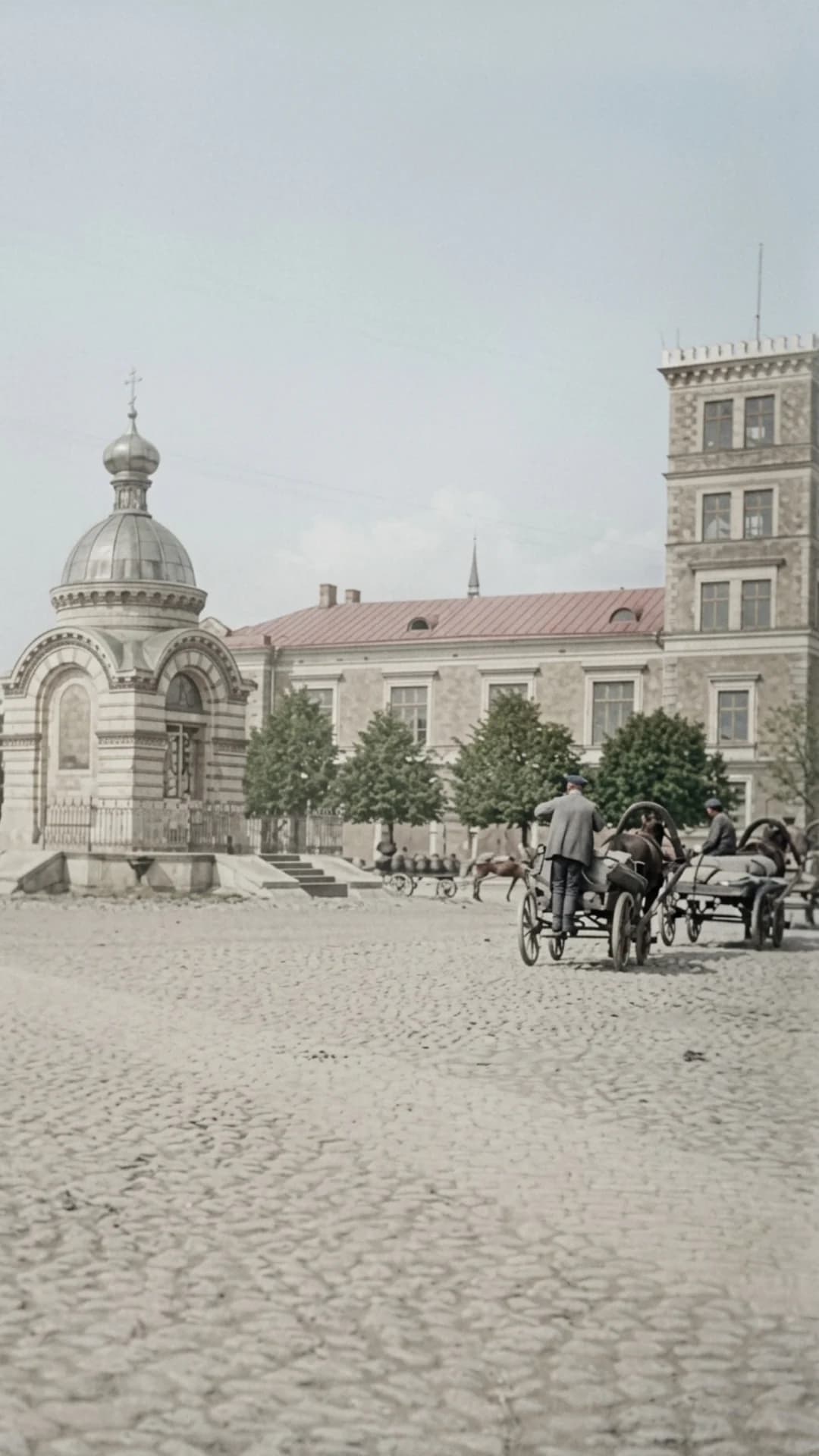
Viru Square: The Vanished Chapel
Find the viewpoint and reveal the Orthodox chapel that once stood on Viru Square — built after an imperial train disaster, used for public water blessings, and erased in 1922.
The story
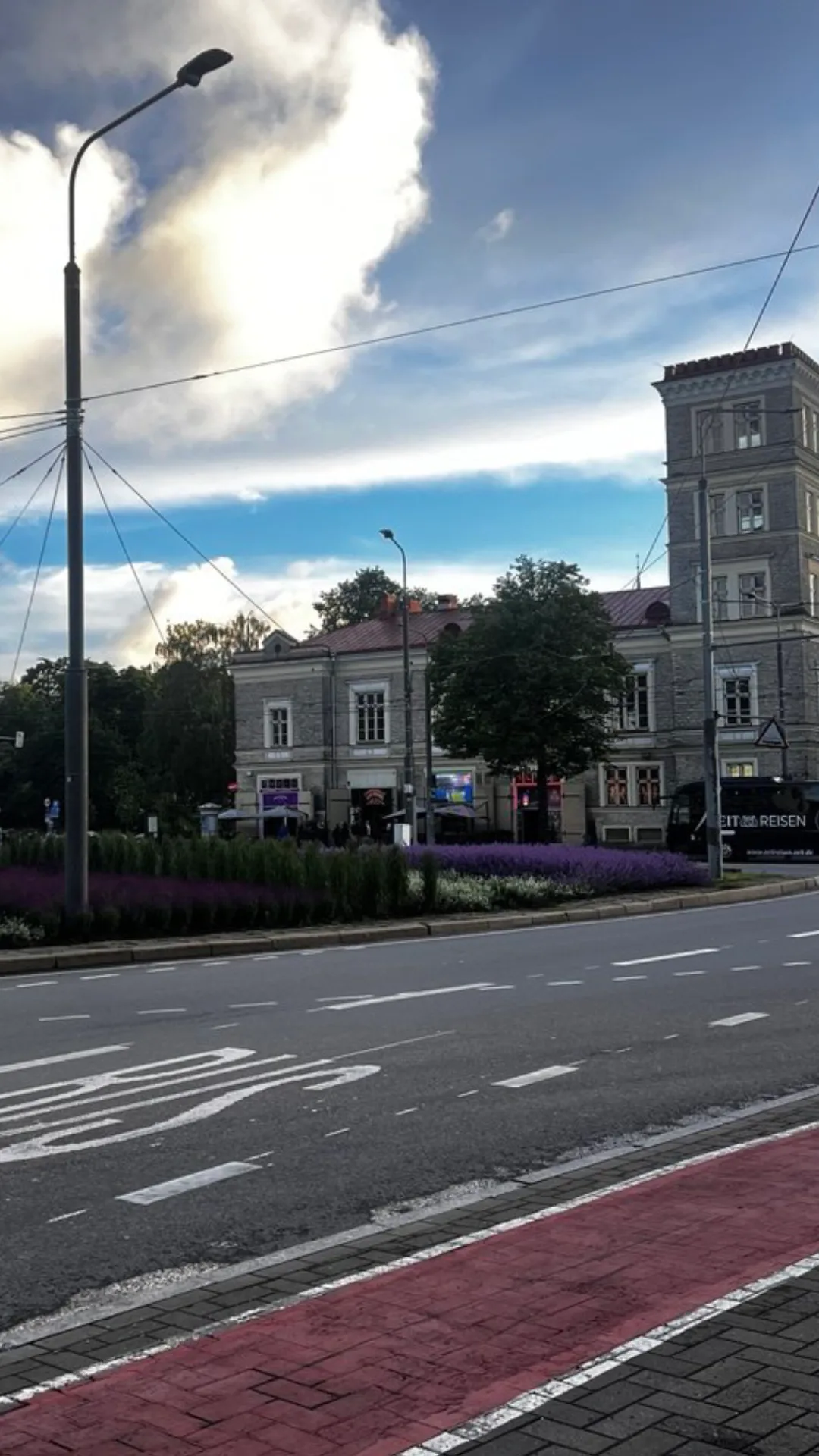
Today Viru Square is traffic, trams, and pavement. In 1900 it had a golden-domed Orthodox chapel standing in the middle of it — and almost nobody walking there today knows it ever existed.
The Alexander Nevsky Chapel was built in 1887–1888 on what was then the Russian Market, designed by Konstantin Nyman. It commemorated a very specific imperial event: the Borki railway disaster of 1888, which Emperor Alexander III and his family survived.
A chapel with plumbing
The chapel wasn't only symbolic. Inside stood a large marble basin for blessing water, connected by underground pipes to vessels outside, where crowds could draw holy water during Orthodox ceremonies. For a few decades, one of Tallinn's busiest squares doubled as a public ritual stage.
In 1922, after Estonia became independent, the chapel was demolished — one of the city's cleanest examples of how a political era can be erased from a square.
Stand on the square with the app and see the vanished chapel rise back over the traffic — then hear what else stood behind it.
Quick facts
- •Built 1887–1888 on the old Russian Market, designed by Konstantin Nyman.
- •Consecrated after the 1888 Borki train disaster, which the tsar's family survived.
- •Demolished in 1922, shortly after Estonian independence.
Open Viru Square in WanderTrails
Walk to the real viewpoint, raise your camera, align the guide with today's view — and watch the past appear over the present, with the full audio story in English, Estonian, or Russian.