Volta Factory
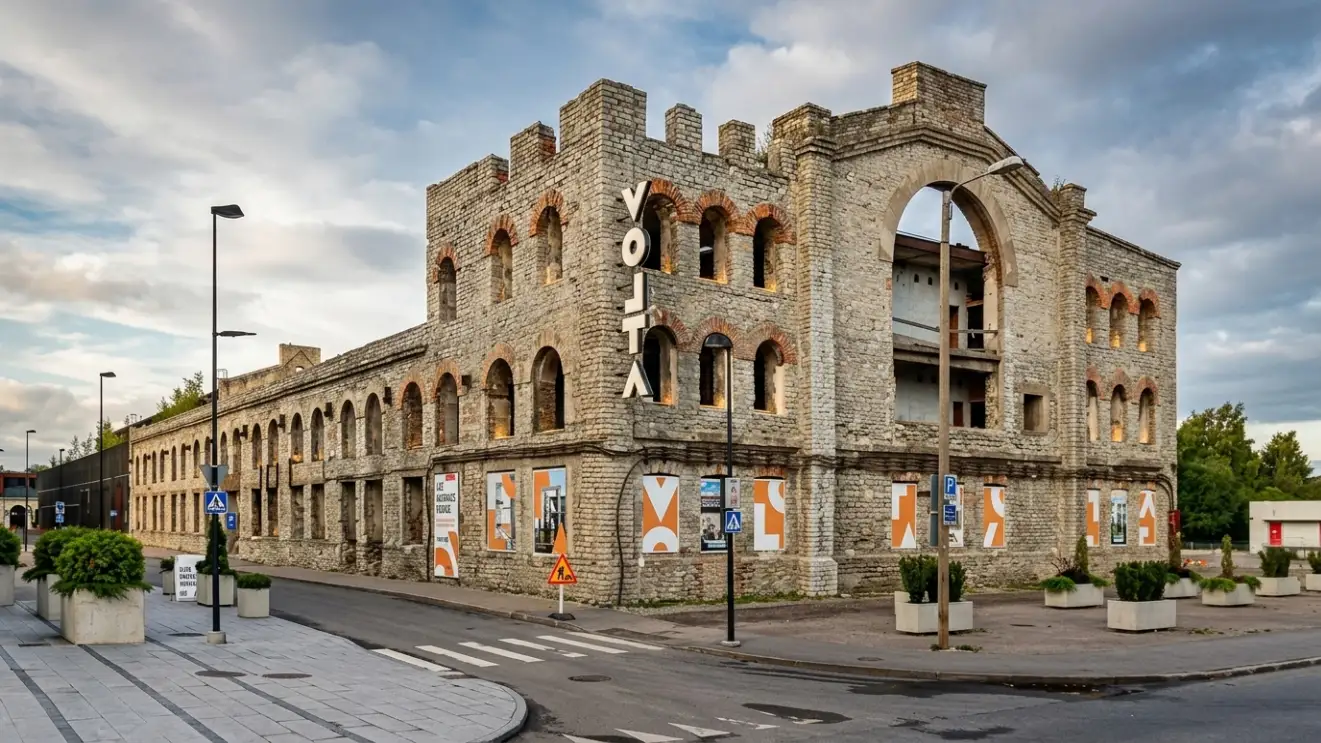
Behind today's polished Volta quarter stands one of Tallinn's most important industrial stories — a factory that helped modernize the city, became a workplace, a political space, a wartime producer, a Soviet mass-manufacturer, and finally a ruin reborn as memory.
The story
In 1899, a meadow on the edge of Kalamaja was chosen for something audacious: a factory that would build electric machines — at a time when electricity itself still felt like the future. AS Volta was founded on 15 April 1899 and its plant started work on 5 January 1900.
Volta didn't just make motors. It supplied equipment for the power plant that switched on Tallinn's public electricity network in 1913. The same factory later produced electrical systems for submarines — and 600,000 hand grenades during the First World War.
Empire, republic, ruin, rebirth
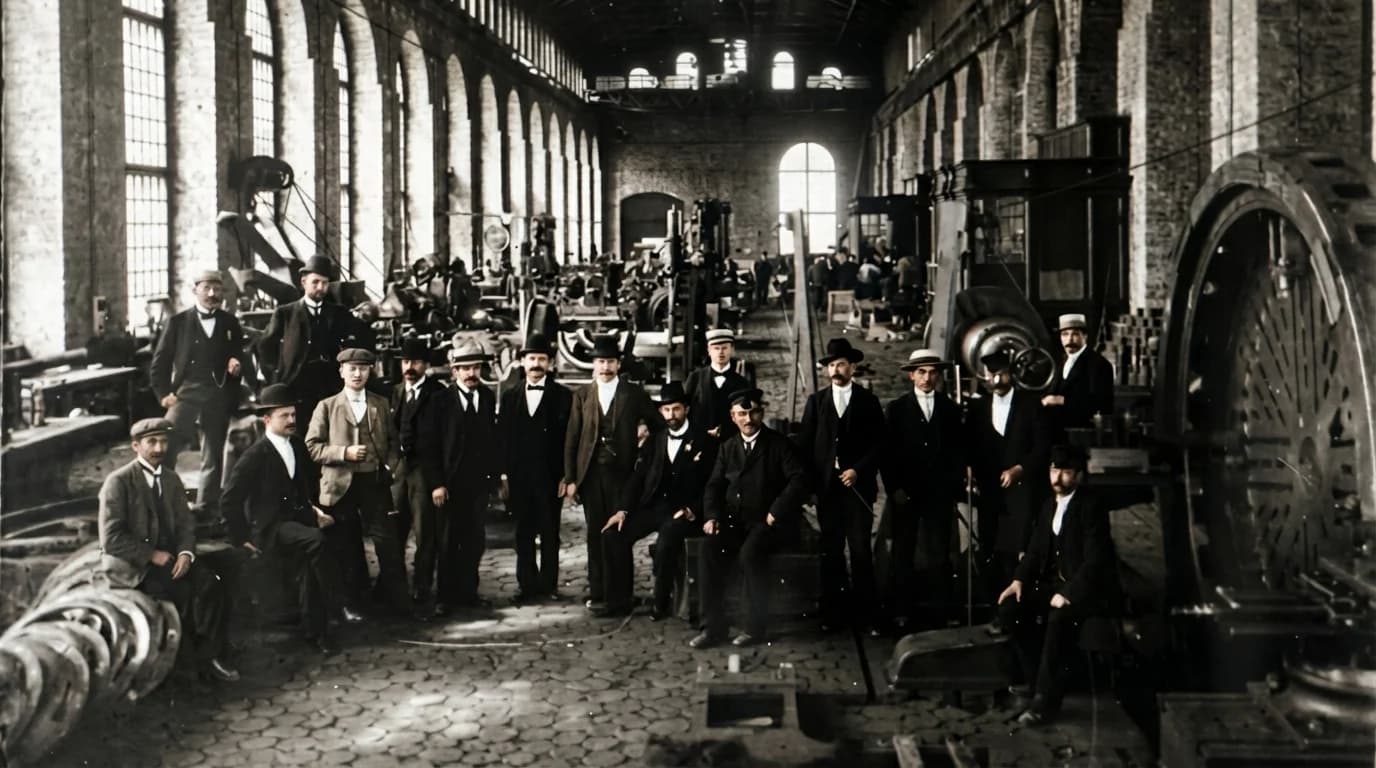
The factory lived through every system that ruled Estonia: evacuated to Russia in 1917, restarted under the republic in the 1920s, nationalized in 1940, then turned into a Soviet mass-producer — in 1963 alone it made 242,000 electric motors and 190,000 electric irons.
Volta was liquidated in the 1990s and stood for years as an industrial ghost zone. Today the quarter is being rebuilt, and its strangest monument survives: the factory's ten-millionth electric motor, finished in 1990 — a memorial not to a ruler, but to accumulated work.
The full discovery in the app adds the 1905 police raid, the submarine contracts, and the perfume factory that once rented Volta's halls.
Quick facts
- •Founded 15 April 1899; production started 5 January 1900.
- •Supplied equipment for Tallinn's first public power network (1913).
- •In 1963 it produced 242,000 electric motors in a single year.
- •The 10,000,000th motor (1990) is preserved in the quarter.
Open Volta Factory in WanderTrails
Stand at the real spot and unlock the full story with photos and audio narration in English, Estonian, or Russian — free, self-guided, no booking needed.