Glehn Park Route
What you'll walk through
- 1
Chapter 1: Glehn's Dream Begins
Glehn Park Route
↓ Preview below - 2In the app
Chapter 2: A Window to the Stars
Glehn Park Route
- 3In the app
Chapter 3: Estonia's Giant
Glehn Park Route
- 4In the app
Chapter 4: The Long Way Home
Glehn Park Route
Chapter 1 · Free preview
Glehn Park Route
Castle in the Pines
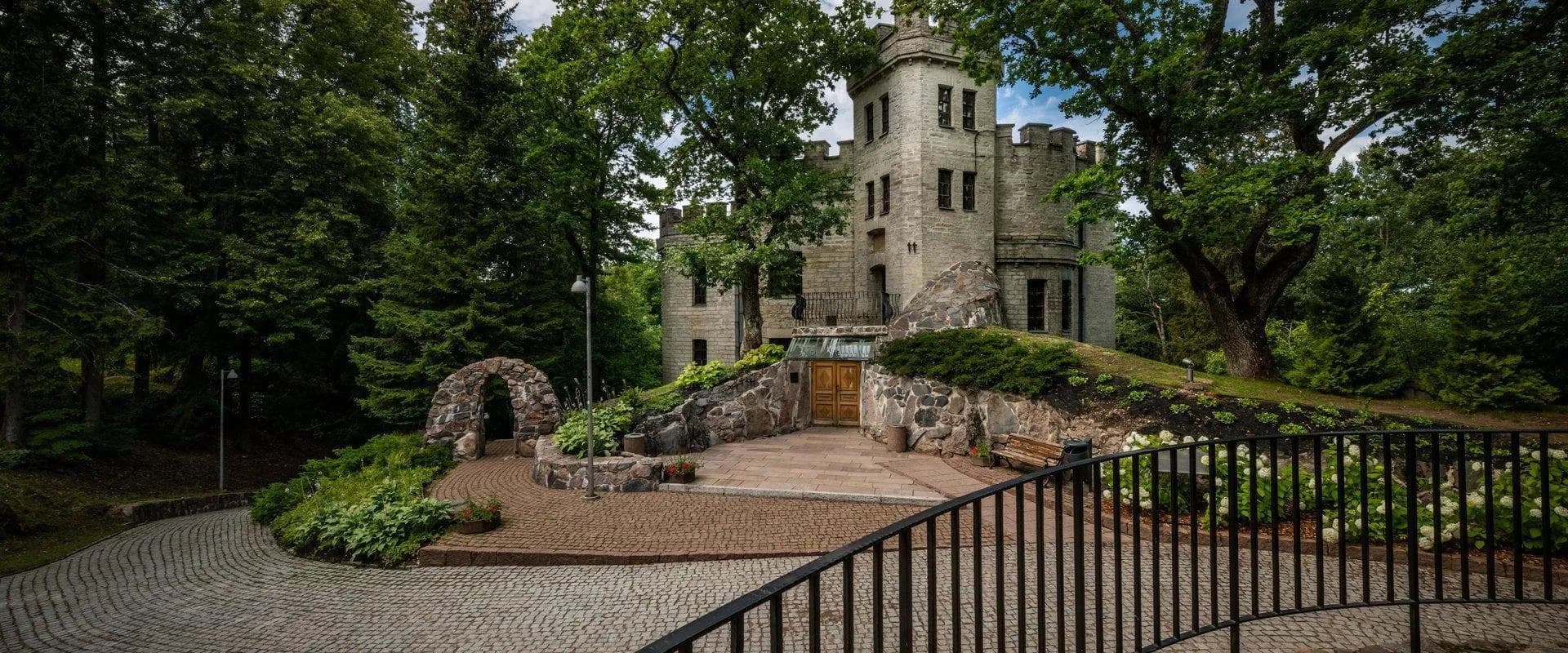
Welcome to the forest retreat of Alexander Nikolai von Glehn—a Baltic German visionary born in 1841 who transformed these pine-covered hills into a living dreamscape. As you begin the route, Glehn Castle rises behind you like a medieval mirage, its stone towers and turrets emerging from the forest canopy. This is no ancient fortress—it was completed in 1886, designed entirely by von Glehn himself after studying architecture, medicine, philosophy, and economics at the University of Tartu and in Germany. Von Glehn wasn't merely a baron; he was an inventor, builder, and romantic dreamer who believed that architecture should merge seamlessly with nature. The castle wasn't meant to dominate the landscape—it was designed to hide within it, nestled among the trees like a fairytale secret waiting to be discovered. Von Glehn established the entire settlement of Nõmme in the northern part of his Jälgimäe Manor lands, giving out the first plots near the railway station in 1873. What began as a small forest retreat would grow into a town—Nõmme gained borough rights in 1917, town rights in 1926, and was merged with Tallinn in 1940. But here, in this enchanted park, von Glehn's original vision remains frozen in time—a place where Gothic spires meet Estonian pines, where myth and modernity intertwine.
Architect of Imagination
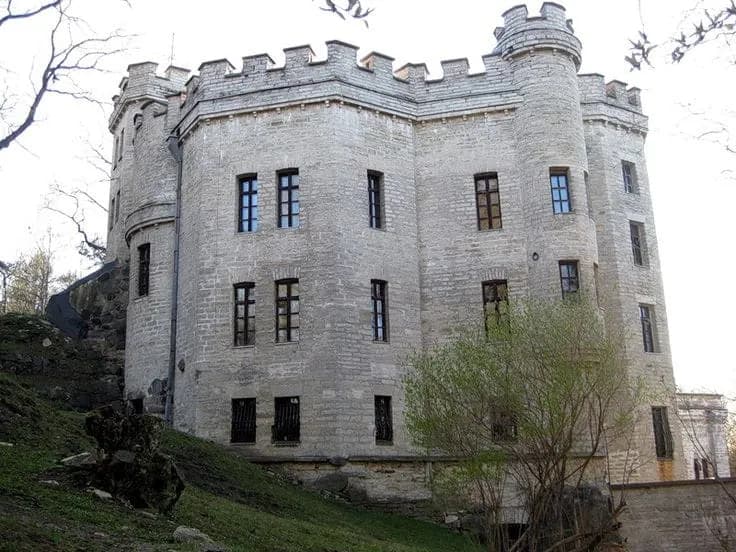
Von Glehn was a true Renaissance man of the 19th century. Born into the wealthy Glehn family—his brother Peter von Glehn became a noted botanist—Nikolai pursued an extraordinary breadth of studies. He didn't just study architecture; he also immersed himself in medicine, philosophy, and economics at the University of Tartu and German universities. This diverse education shaped his unique vision for this park. He designed every element himself, blending Romantic and Gothic architectural styles with a deep appreciation for Estonian folklore and natural science. Between 1900 and 1910, he built a palm house for exotic tropical plants—an audacious project in Estonia's harsh northern climate, requiring innovative heating systems and glass construction techniques. He carved granite sculptures by hand, including the massive figure of Kalevipoeg you'll encounter later on this trail. He even built an observatory tower in 1910, demonstrating his fascination with astronomy. Von Glehn wanted to create more than a garden—he envisioned a complete world where ancient myths, cutting-edge science, and romantic aesthetics converged under the towering pines. Every pathway, every stone, every carved figure was part of a carefully orchestrated dream, a place where visitors could wander between past and future, legend and discovery.
The story keeps going — 11 more stops on the street
This was the beginning of chapter 1 of 4. The full route walks you stop by stop through Tallinn with audio narration in English, Estonian, and Russian, historical photos at every point, and XP for your Explorer Passport. Free, self-guided, no booking.