Tartu Heartbeat: Culture & Student Life
What you'll walk through
- 1
Chapter 1: Welcome to Tartu
City of Students
↓ Preview below - 2In the app
Chapter 2: Poe Street / Küüni
Streets with Memory
- 3In the app
Chapter 3: Raekoja plats & Kissing Students
Tartu’s Icon
- 4In the app
Chapter 4: Pirogov Park View & Werner Café
Coffee, Writers, Traditions
- 5In the app
Chapter 5: University of Tartu
Mind of Estonia
Chapter 1 · Free preview
City of Students
A City that Thinks
Welcome to Tartu — the place Estonians affectionately call the country's 'brain'. Tallinn may hold the ministries, but Tartu has long been where ideas are tested, argued over, and turned into identity. For more than four centuries this modest river city has produced scientists, poets, reformers, artists, and dreamers who helped shape the way Estonia understands itself.
That spirit comes from the university, but not only from it. Around lecture halls grew printing houses, cafés, student societies, rehearsal rooms, and conversations that often mattered as much as official decisions. In the 19th century, when Estonia's national awakening gathered strength, Tartu became one of the places where language, education, and culture turned into something political. To speak, write, and study in Estonian was no longer just a practical choice — it became a statement of belonging.
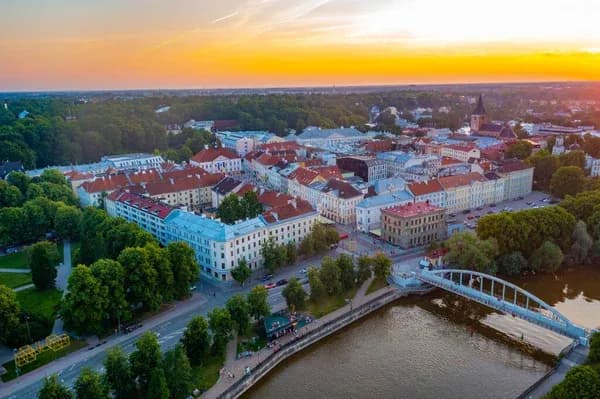
Tartu does not feel powerful in a loud way. There are no skyscrapers, no financial districts, no need to impress at first sight. Its energy hides in courtyards, classrooms, bookshops, shared apartments, and late cafés. As you walk, listen for that quiet rhythm: curiosity, nostalgia, and a little chaos. This is a city built less on monuments than on people thinking together.
Old City, New Body
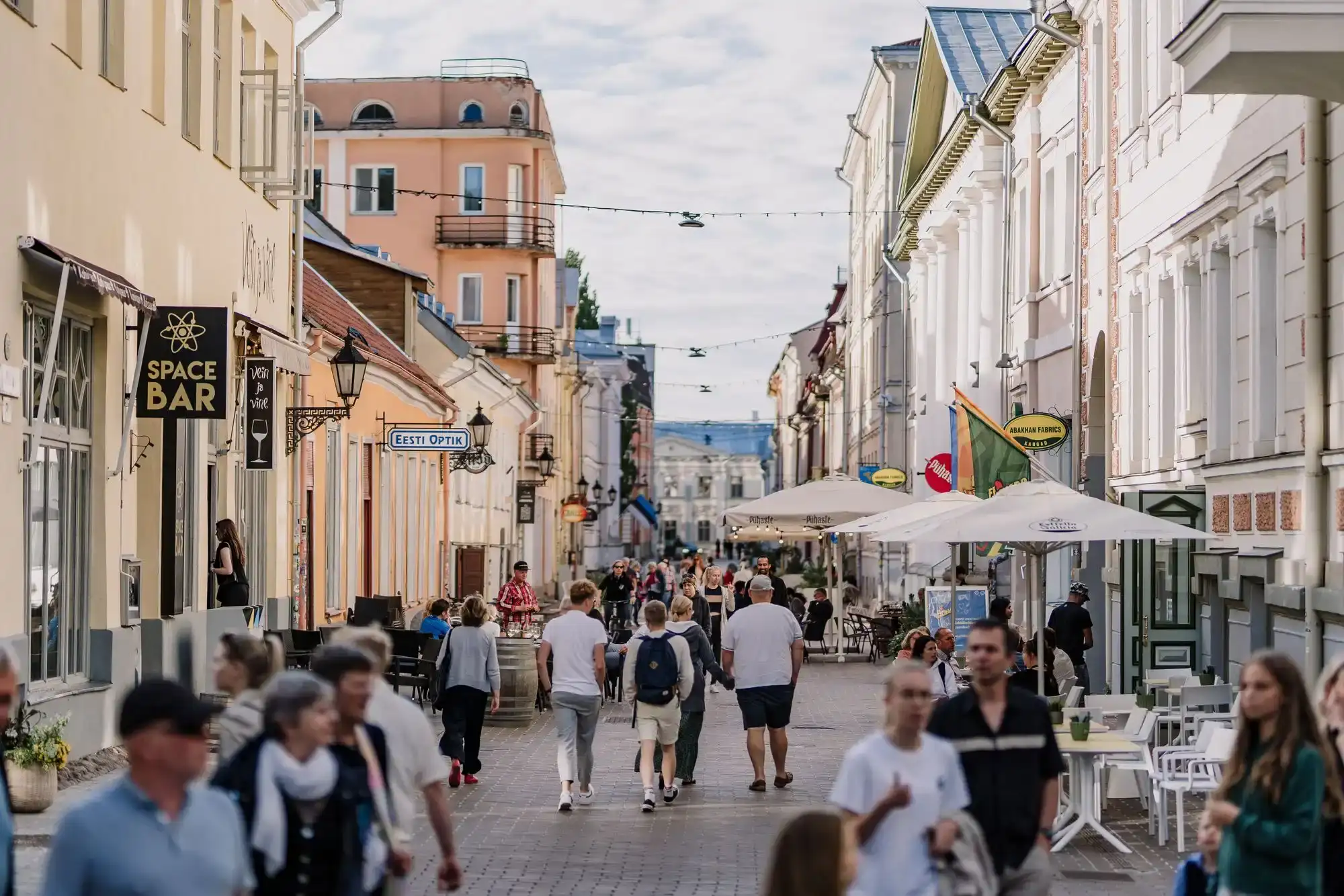
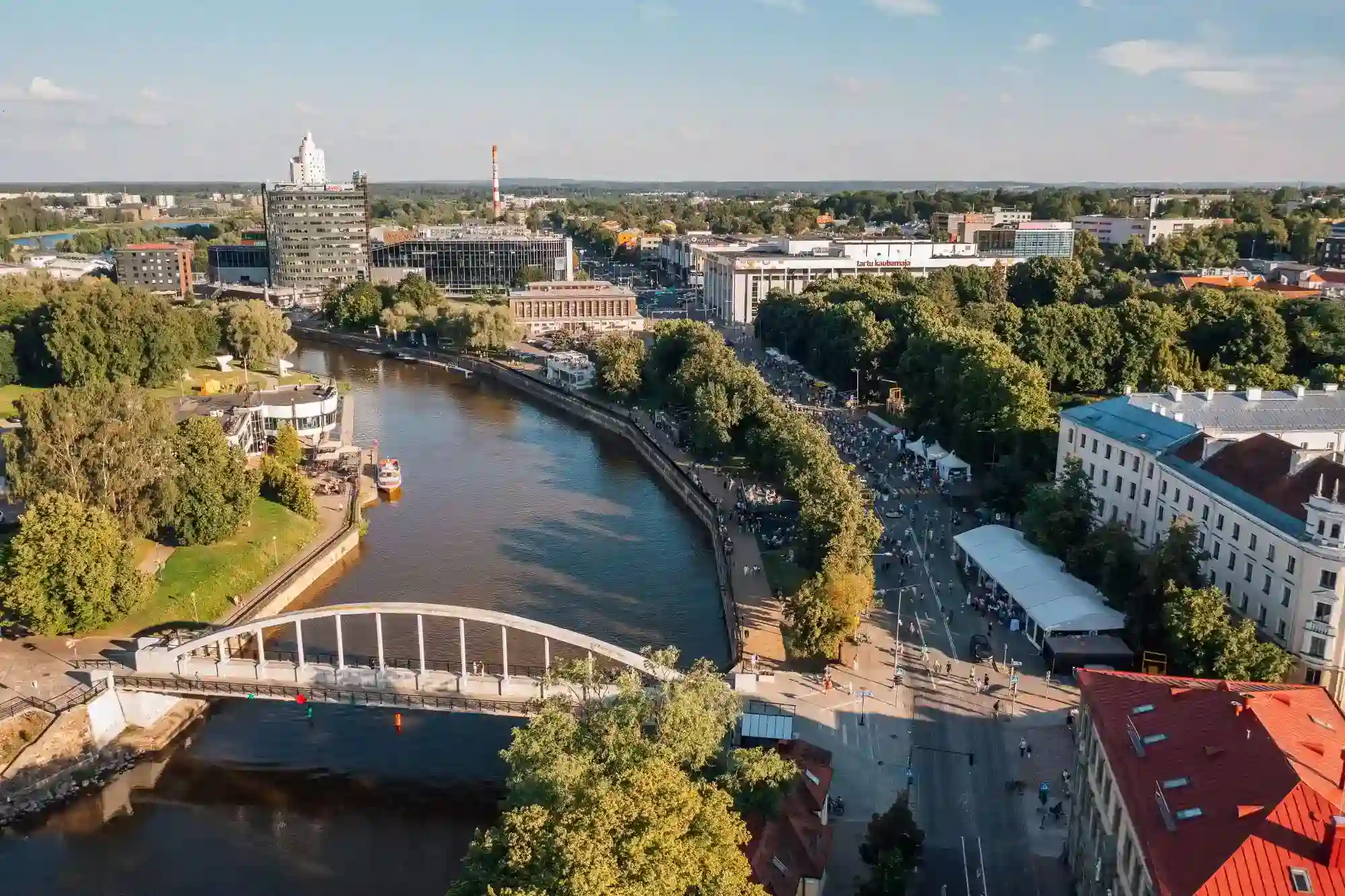
This walking route begins in the commercial heart of modern Tartu — the Kaubamaja district. It looks practical: department stores, buses, cafés, errands, people crossing in every direction. But even here, the older city is close. This is the area where the rhythm of the modern center meets the edge of Tartu's historic core.
As you move from Kaubamaja toward the old town and the university quarter, you cross centuries in minutes. Beneath today's glass, stone, and asphalt are traces of Dorpat — the Hanseatic trading town that once stood behind walls, gates, guild rules, and market privileges. The merchants are gone, but the compact rhythm remains: short streets, quick turns, and a city scale made for walking rather than rushing.
The story keeps going — 11 more stops on the street
This was the beginning of chapter 1 of 5. The full route walks you stop by stop through Tartu with audio narration in English, Estonian, and Russian, historical photos at every point, and XP for your Explorer Passport. Free, self-guided, no booking.